Winging it is costing you the high-ticket jobs
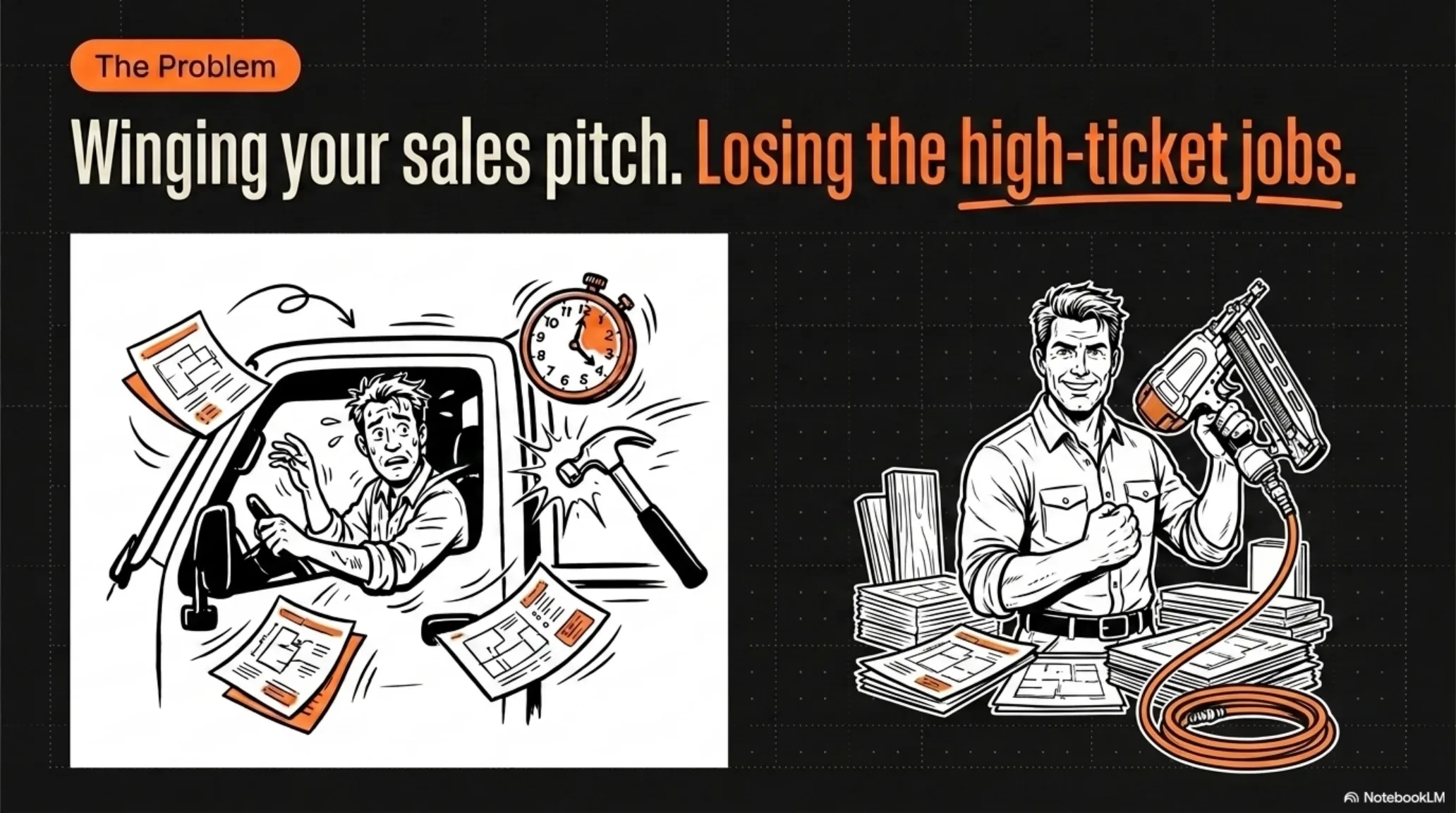
Most landscaping companies do not lose the big job on price. They lose it in the truck, five minutes before the walkthrough, because the whole sales process lives inside the owner’s head. You are the crew lead, the bookkeeper, and the closer, so every quote gets built from scratch and every pitch sounds a little different. The customer cannot see your workmanship yet. All they can see is the presentation, and a scribbled number on a carbon copy loses to a clean proposal every time.
Think of it like fastening. A hammer and a box of nails will frame a wall, but a high-volume crew runs nail guns because speed and consistency win when the work stacks up. Your sales presentation deserves the same upgrade. The fix is not working harder on each quote. It is moving the process out of your head and into a repeatable factory that turns out a professional presentation for every single prospect.
The setup: one library for your brand, voice, and pricing
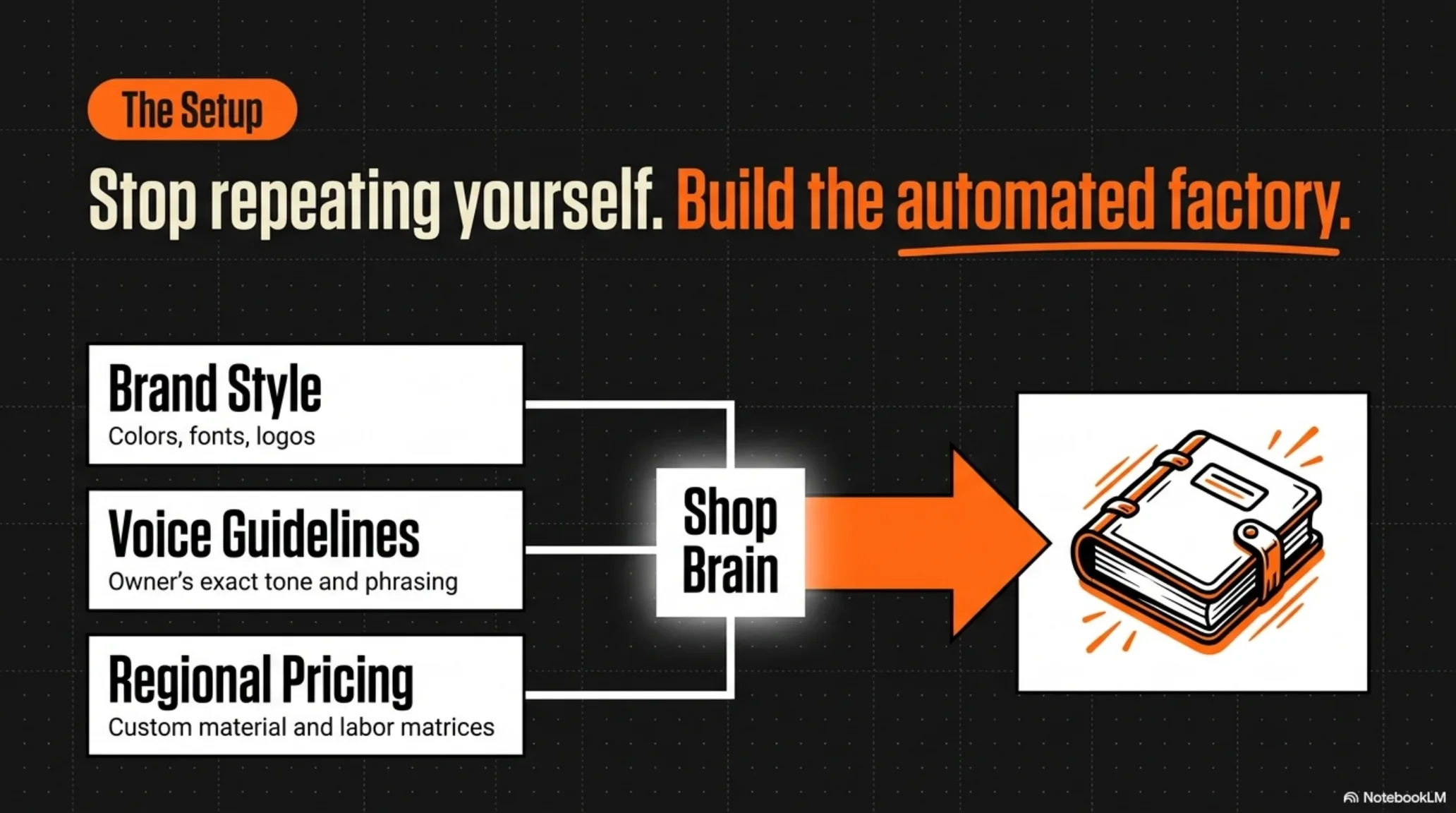
The factory runs on one thing: a central business standards library where your rules live. Set it up once and every quote, slide, and customer reply gets built from the same source, so nothing depends on how fried your brain is at 7pm. It takes three sets of rules:
- Brand style rules. Your fonts, your colors, your logo, locked in one place. Every proposal looks like it came from an established company, not a fly-by-night operation with a different look every week.
- Voice rules. How your company talks to customers, written down. Whether it is a quote or a review reply, it reads like you on your best day, professional without sounding like a robot.
- Pricing rules. Your rates, your material and labor numbers, hard-coded by service tier. The math is done before you ever walk the property, so no more re-figuring the same job at the kitchen table.
That is the whole foundation. Once those three are set, the system knows exactly how to build a presentation that fits your company, the same way a website built to book jobs does the selling before you ever ring the doorbell.
The payoff: a three-tier presentation for every prospect
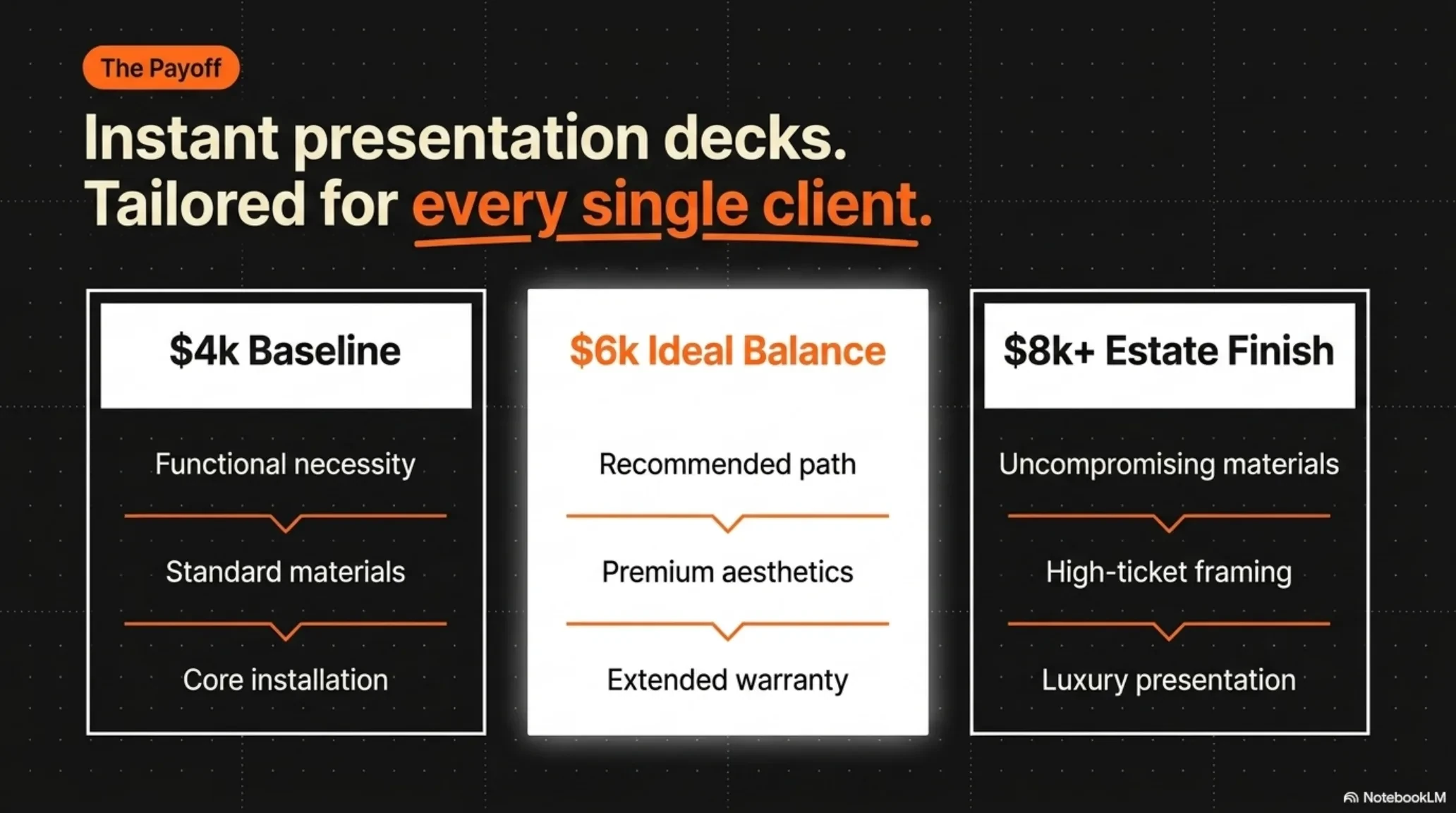
Here is what comes out the other end: a clean, branded presentation with three options, built in minutes instead of hours. Instead of handing the homeowner one number and hoping, you hand them a choice. Here is an example of what a three-tier proposal looks like for a single landscaping project. The numbers below are examples, your real prices come straight from your own pricing rules:
| Package | What it says to the customer | Example investment |
|---|---|---|
| Standard | A clean, fully functional baseline for the project. | $4,000 |
| Premium | The recommended balance of beauty and performance. | $6,000 |
| Luxury | Uncompromising materials with an estate-level finish. | $8,000+ |
A tiered proposal also answers the question every owner has about pricing pages: yes, showing real numbers works, which is the same reason we publish what a website actually costs instead of hiding it behind a form.
Why three options close more jobs
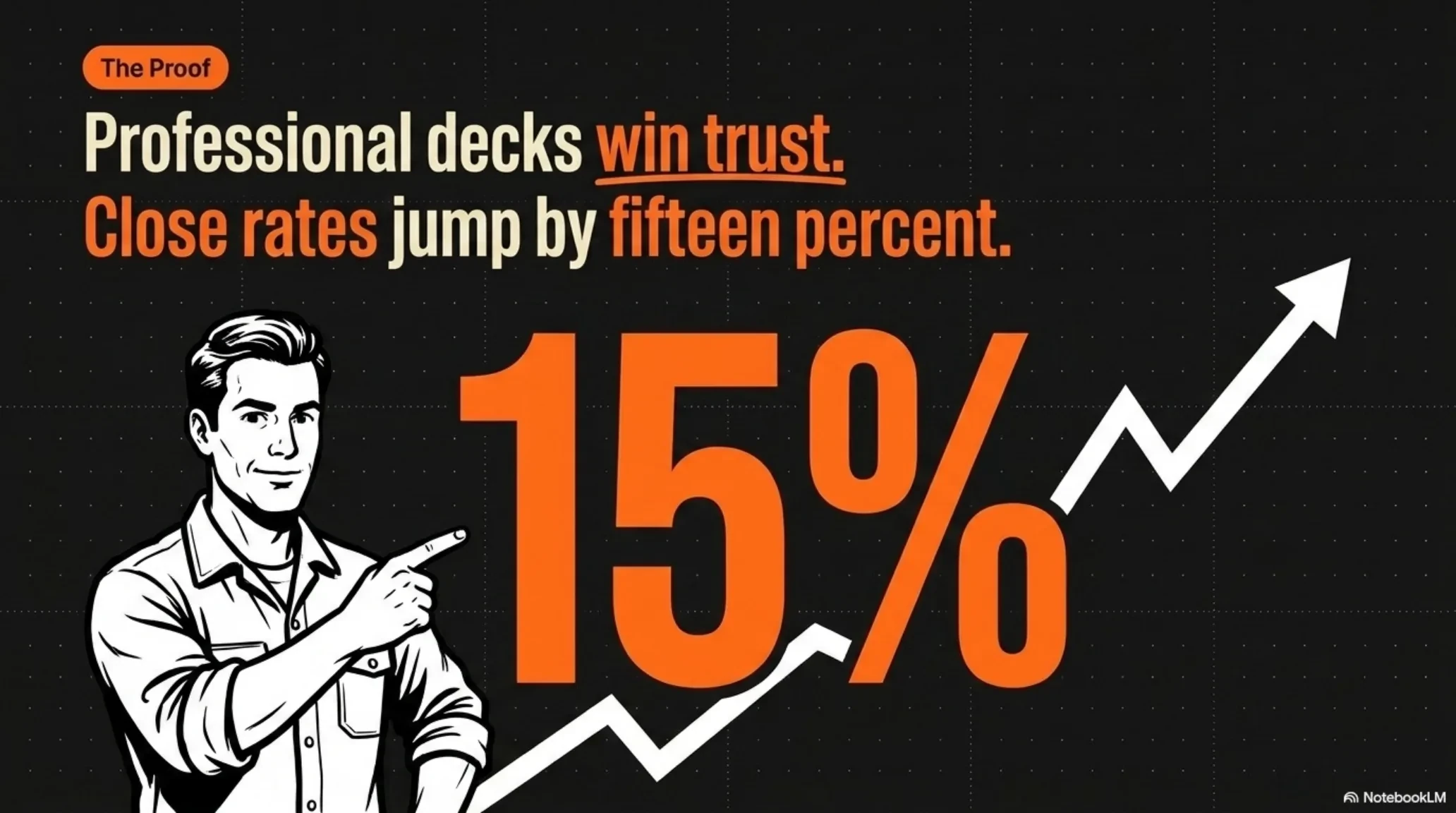
One price forces a yes-or-no decision, and a nervous customer defaults to no. Three options change the question from “do I buy this” to “which one do I buy”. The customer picks the level that fits their budget, you stop competing on the lowest number, and the premium tier does not scare anyone because it is sitting next to a bigger one. On the live build above I walk through the numbers: presenting three options runs close rates up by about 15 percent, and it raises the average ticket at the same time, because a professional deck makes the higher tier feel safe to choose.
The same rules answer your reviews
The library does not stop working when the check clears. The same brand and voice rules apply to your Google reviews, and your review responses are sales copy for the next hundred people who read them. Three rules keep them right:
- Mirror the customer. A one-line review gets a short, warm response, not three paragraphs that read like a press release.
- Hold the middle ground. Professional and helpful, never over-excited and never monotone.
- Write for the next customer. You are not just thanking the person who left the review. You are talking to the prospect deciding whether to call your company tonight.
I build these systems live every day
This is not theory. I build these systems for home-service businesses live on camera every day, and the pattern holds across landscaping, HVAC, and every trade in between: the company that shows up with a consistent, professional presentation gets treated like the premium option and priced like it. If you want to see what the leaks in your current setup cost first, run your missed-call numbers with the calculator. Two minutes, your real call volume, a dollar figure on what is slipping away.
Frequently asked questions
Does this system replace my sales team?▾
No. It gives your team a nail gun. They still run the relationship and the walkthrough, the system just handles the heavy lifting of building the presentation, so they show up faster, more accurate, and more professional.
Will this make my company look like every other landscaper?▾
The opposite. The presentations are built from your own brand and voice rules, so the output is tailored to your company. Most pen-and-paper competitors cannot match a consistent, premium identity, which is exactly why it stands out.
How much time does this actually save?▾
You go from a site visit to a finished three-tier presentation in minutes instead of hours. The formatting, the branding, and the pricing math are already done, so the only thing left is the conversation with the customer.
Why three tiers instead of one price?▾
Three options move the customer off yes-or-no and onto which-one. It takes the focus off the lowest price, makes the middle and upper tiers feel safe to choose, and raises the average job size without any pressure tactics.