The surge is on the calendar
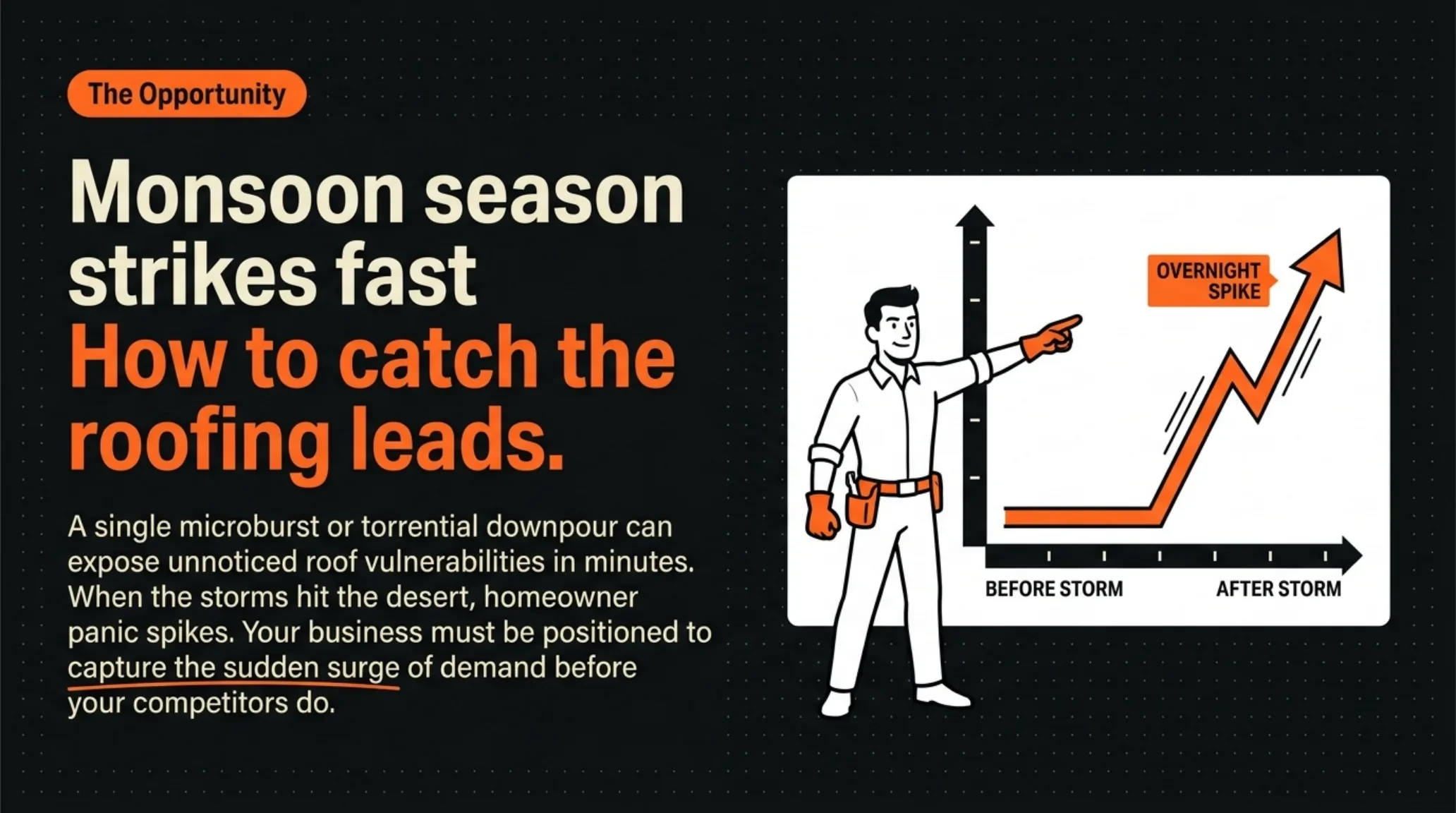
This week I sat down on a live stream and built a monsoon marketing campaign for a roofing company, start to finish, in one evening. The offer, the social posts, the graphics. The whole thing was ready before a single cloud showed up. That evening is the difference between owning monsoon season and chasing it.
Arizona does the same thing every summer. Bone dry for months, then a wall of rain arrives in an afternoon and finds every weak spot on every roof it touches. Homeowners who never think about their roof suddenly think about nothing else. The busiest weeks of your year are already printed on the calendar, and you know they are coming before the homeowners do. Almost no shop actually uses that head start.
Most roofers start marketing after the first storm, which is the exact moment every other roofer in town starts marketing too. Same ads, same week, same panicked homeowners scrolling past a wall of identical banners. The shop that showed up before the rain owns the neighborhood while everyone else fights over what leaks through.
Build the offer before the clouds show up

A storm-season offer does not need to be clever. It needs to exist before the season does. Name it for the season, give it a firm price and a real deadline, and make it an easy yes. A pre-monsoon roof checkup with a set scope beats a generic free estimate, because it answers the question the homeowner is already quietly asking in July: is my roof going to make it through this one?
One thing to leave out is the doom. While I was building that campaign on the live stream, the first draft headline that came back warned that a single microburst could turn a tiny roof problem into thousands of dollars of drywall damage and structural mold within minutes. I laughed and said it out loud on camera: that is fear-based marketing. Sell readiness, not terror. The homeowner already knows storms are bad. What they want to hear is that somebody has it handled before the sky opens.
Chasing the storm vs. ready before it
Two roofing companies can run the same trucks and the same crews and have completely different monsoon seasons, depending on nothing but when their marketing started.
| Chasing the storm | Ready before it |
|---|---|
| Marketing starts after the first leak calls come in | Seasonal offer live weeks before the first storm |
| Competing on price against every roofer in town, the same week | Positioned as the shop that saw it coming |
| Schedule chaos, emergency jobs stacked on top of each other | Inspection pipeline booked on your own terms |
| One quiet monsoon and the season is a bust | Steady work before, during, and after the rain |
Reactive shops rent the season. Prepared shops own it.
Check every claim your marketing makes
This next part happened on the same live stream, and it is the part I would tattoo on every contractor’s marketing budget. A campaign draft for the roofing company came back promising high-tech drone inspections and full insurance adjuster coordination. Sounded fantastic. The company offers neither one. I went back through their actual service list on camera to be sure, and both claims were invented out of thin air.
If that campaign had shipped, the first phone call it produced would have been a homeowner asking about the drone inspection they just read about, and the shop would have opened the relationship with a walk-back. Marketing that promises services you do not sell costs you the job and the review in the same breath. Whoever writes your marketing, whether it is an agency, a tool, or your office manager, check every line against what your crew actually delivers before it gets anywhere near a homeowner.
The surge only pays if you catch the calls
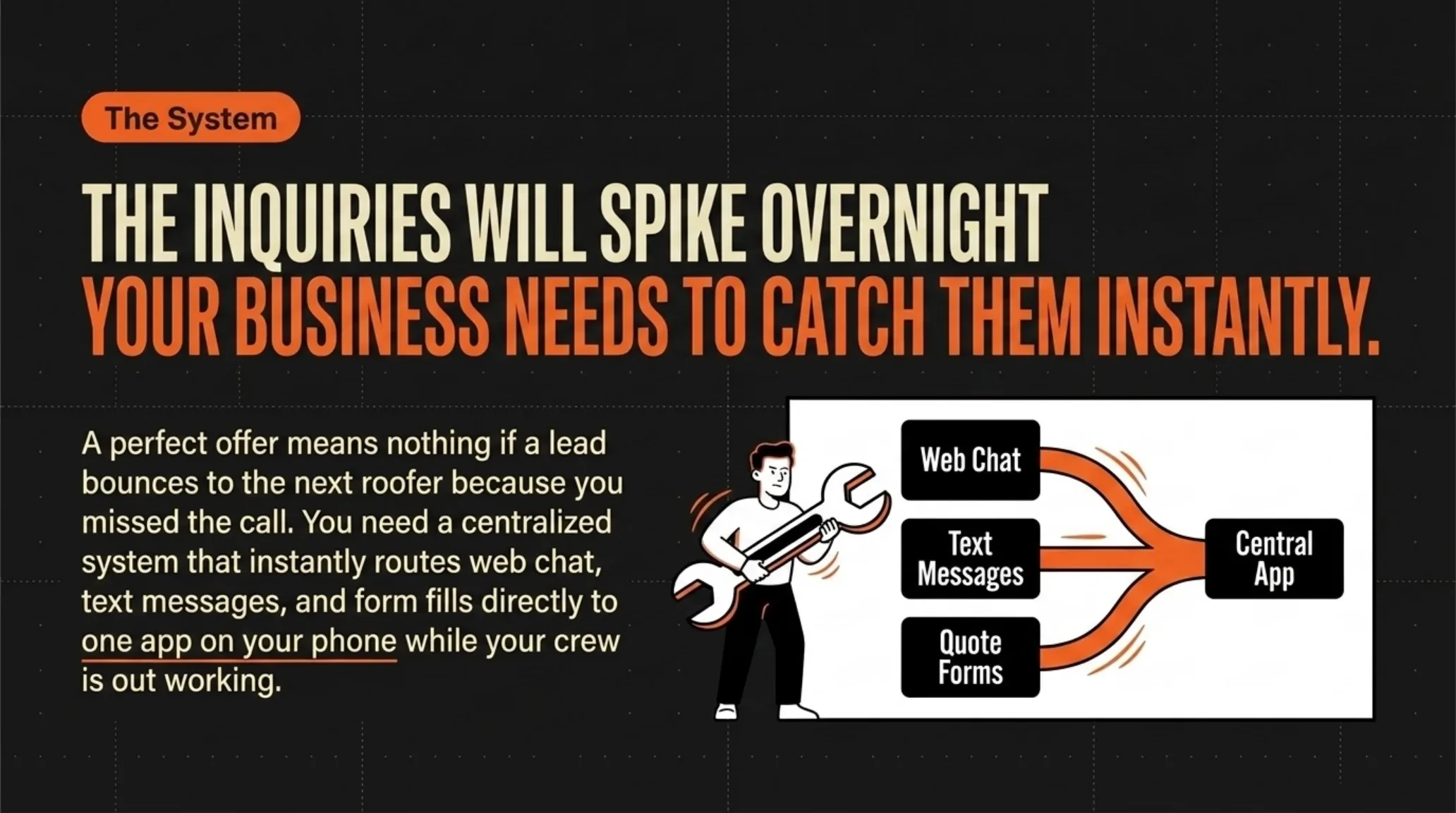
Everything above is wasted if the storm hits and nobody picks up. When a monsoon cell rolls through a zip code, every weak roof in the neighborhood fails the same night, and every homeowner reaches for the phone at the same time. You are on a roof. So is your competitor. The job goes to whichever shop responds first.
That is a systems problem, not an effort problem. A call that rings out needs a text going back in under a minute, so the homeowner holds instead of dialing the next name. Web chats, quote forms, and texts need to land in one inbox on your phone instead of five separate logins. The shop that catches the surge is not the one working hardest that week, it is the one whose phone was set up before the rain. If you want to know what the calls you are missing right now actually cost, run your own numbers through the calculator.
Not a roofer? Your trade has its own monsoon
Monsoon is just the roofing version. Every home-service trade has a season that behaves exactly like this. For HVAC it is the first week of triple digits. Landscapers get it when spring cleanup hits, and pest control gets it the first warm stretch that wakes everything up.
The trade changes but the pattern does not. Demand spikes on a schedule you already know. The company that built its offer early, kept its marketing honest, and set up the system to catch the calls before they all came at once wins the spike. I build these systems for home-service businesses live on camera every day, and the catching part is exactly what gets installed inside a website and lead system built to book jobs. If you are weighing the setup cost against what one busy season brings in, here is what a website should actually cost. It is less than the first storm job.
Frequently asked questions
Monsoon season already started. Is it too late to do this?▾
Late beats never. The season runs for months, not a weekend, and a storm-season offer takes days to put together. Get it live before the next storm, then keep it on the shelf ready for next June. The prep you do this year compounds into every season after it.
What should a storm-season offer actually include?▾
Keep it simple: a roof checkup with a firm price, a clear scope, and a deadline tied to the season. Name it for the season and say plainly what the homeowner gets. The point is to hand them an easy yes before the rain. Fancy is not required. Ready is.
I already get plenty of calls when a storm hits. Why market before it?▾
Because storm-week calls are the worst leads of the year. Everyone is calling every roofer at once, the schedule is chaos, and panicked homeowners pick on speed and price. A pre-season pipeline books calmer jobs at better margins, and it still feeds you in a quiet monsoon year when the storm chasers starve.
How do I keep up with the phone during the surge without hiring office staff?▾
Automate the first response. When a call rings out, a text goes back in under a minute asking what the caller needs, so they hold instead of dialing the next roofer. Put the web chats, forms, and texts in one inbox and work it between jobs. Catching every lead beats trying to answer every call live.