What it is, in one sentence
Missed-call text-back is a simple automation: when a call to your business rings out, the caller automatically gets a text within under a minute — “Sorry we missed you! What do you need? Reply here and we’ll get you booked.” — so the customer who couldn’t reach you starts a conversation instead of dialing your competitor.
It’s the highest-leverage piece of technology a local service business can install, and most owners have never heard of it.
Why it works: the 5-minute window
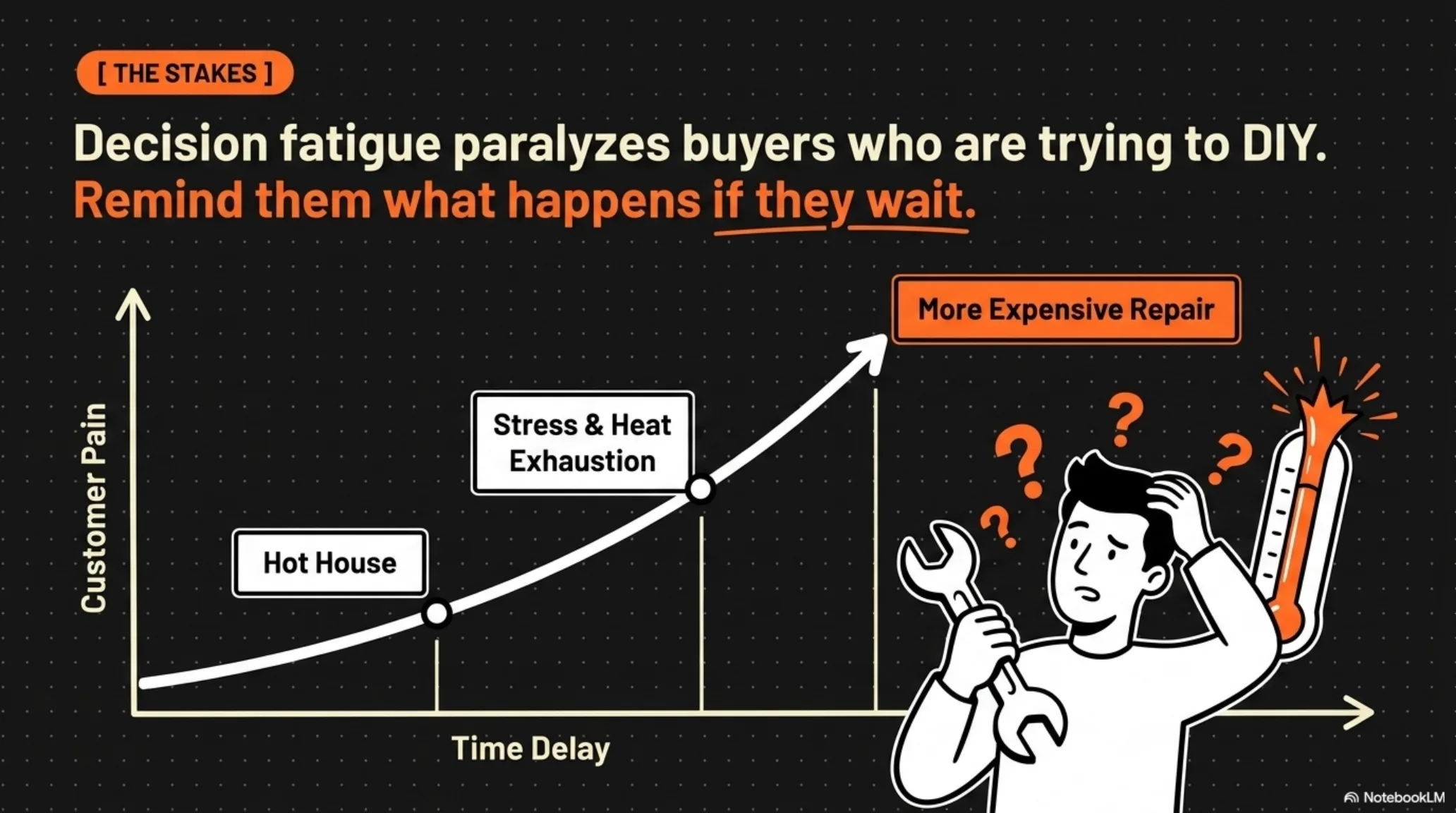
Lead-response studies keep finding the same thing: contact a lead inside 5 minutes and you’re many times more likely to win the job than if you wait even half an hour. Local service calls are worse — a homeowner with a burst pipe or a dead AC doesn’t wait at all. They call down the Google list until a human (or a text) responds.
You physically cannot answer every call. You’re on a ladder, under a sink, mid-cut, driving. The text-back doesn’t need you to. It responds in the window that decides who gets the job, holds the customer in a conversation, and gives you something a voicemail never does: their problem in writing, ready to book.
What a good text-back setup includes
- The instant reply — fires in under a minute after a missed call, worded like a person, not a robot (“Sorry we missed you — what’s going on?”).
- A real conversation path — replies land in one inbox on your phone, so you (or your system) can answer between jobs and book the work.
- A booking link in the thread — the customer can pick a slot without another phone call.
- Follow-up nudges — if they go quiet, one or two polite bumps; most jobs are won on the follow-up nobody sends.
What it’s not: a replacement for answering the phone. It’s the net under the tightrope — it catches what slips.
The math on one caught call
Run your trade through it: a plumbing emergency runs $175–$450, a full roof $8,000–$20,000, a new grooming or barbershop regular is worth hundreds a year in rebookings. If text-back saves one call a month, it out-earns its cost by an order of magnitude. See your own number in the Missed Call Revenue Calculator — most owners guess a third of their real leak.
Text-back is part 3 of the five-part system in Websites That Book Jobs — J1 Systems installs it wired to your website, your Google Business Profile, and one lead inbox, as part of the flat $297/month system. Book a call and it can be catching calls this week.
Frequently asked questions
Do customers actually reply to the text?
Yes — texting back is lower-friction than leaving a voicemail, which most callers under 60 simply won’t do. A short human-sounding question (“what’s going on?”) gets answers because the customer still has the problem that made them call.
Does it work with my existing business number?
Yes. The usual setup routes your calls through a tracked line that forwards to your phone exactly as before — you answer normally when you can, and the automation only fires on the calls that ring out. Your published number can stay the same.
Can I just do this manually — text people back myself?
You can, and you should — when you see the missed call. The problem is the gap: you notice at 6pm, the call came at 1:40pm, and the job was booked elsewhere by 2. Automation exists because the 5-minute window closes while you’re working.
Is missed-call text-back legal? Do I need consent?
Texting back someone who just called you is responding to an inquiry they initiated — the safest category of business texting. Keep it conversational (no marketing blasts to the number later without proper opt-in), honor “STOP” replies, and you’re operating the way the rules intend.