What these fake listings actually are
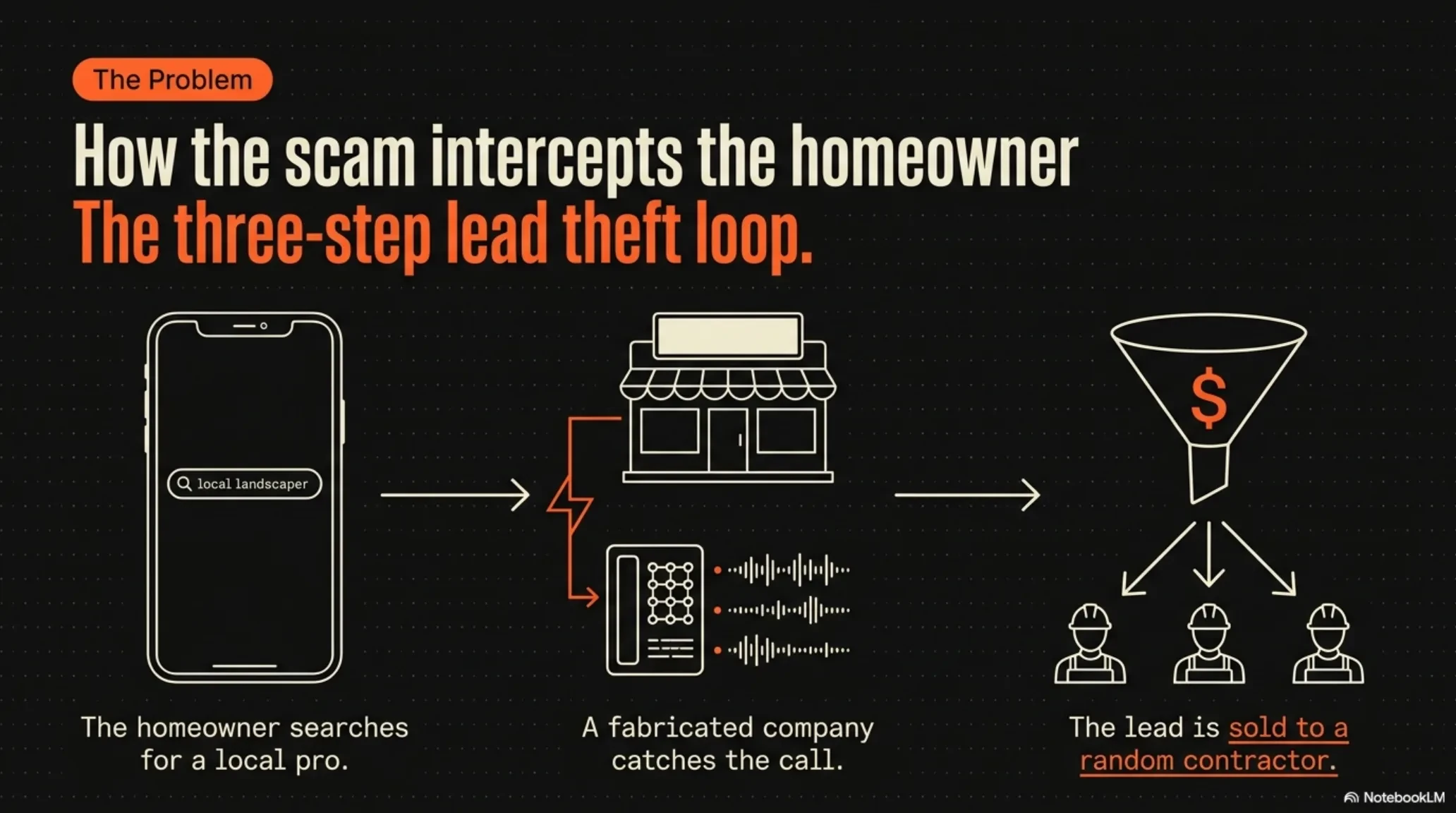
This one comes straight from a live investigation. Two landscaping listings in my own market, New Build Landscaping and Trusted Terrain Landscaping, looked like normal local shops. Neither one is a real service provider. They are lead-generation fronts: websites and profiles built to rank in local search, catch a homeowner’s call, and sell that customer to whoever pays for the lead.
The people behind these listings do not own a truck, do not run a crew, and usually have zero connection to your community. They rank, they intercept your customer, and they auction the job to a stranger. Every call one of these traps catches is a call your shop never hears ring.
The phone test: press one and hang up
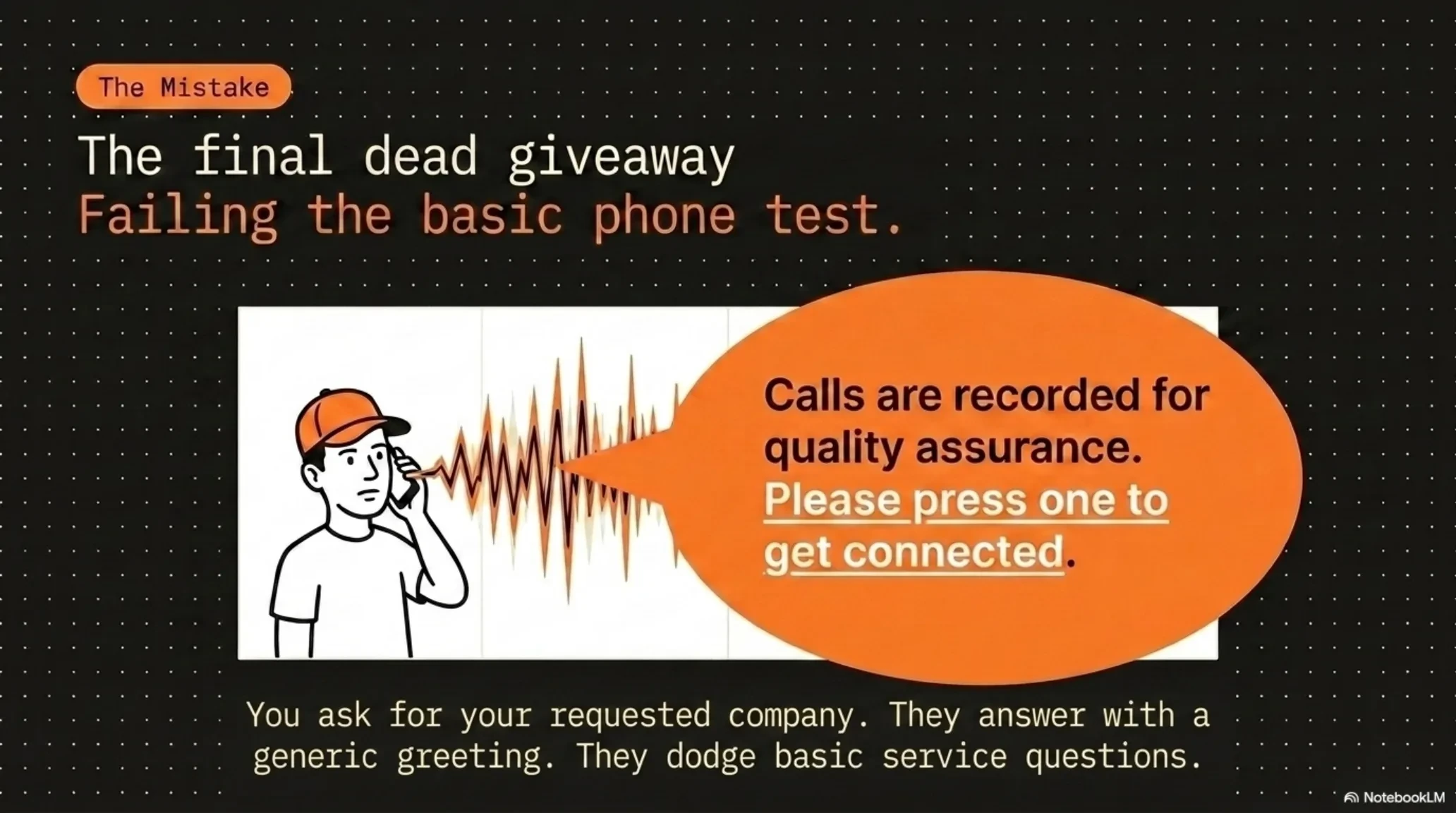
The fastest way to expose a trap is to call the number. Real contractors answer their own phones or have a local dispatcher. When I called both listings, I got the same corporate treatment twice in a row: a recorded prompt asking me to press one to connect. A lead-routing menu on a five-man landscaping company is a red flag you can hear.
Then comes the name test. I asked if I had reached the company on the listing, and the rep answered with a completely different company name, the same one on both calls. Two “different” local shops, one phone room. When I asked a basic service question, whether they pull weeds or only do fresh installs, the guy had no clue and hung up. If they cannot answer how their own crew operates, there is no crew. They are just selling your info.
Fabricated photos always leave a trail
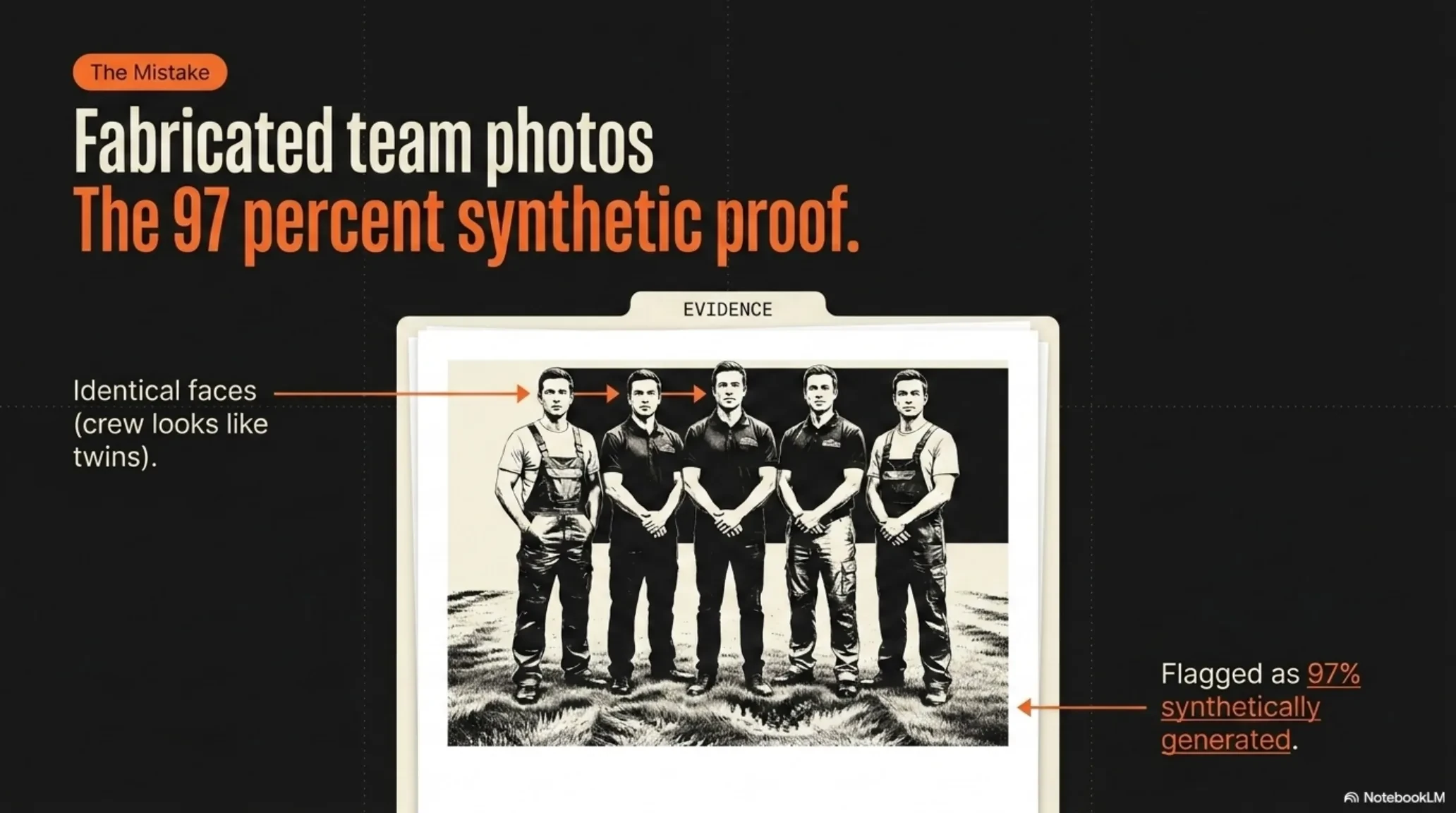
These sites dress themselves up with computer-generated photos to look established, and the fakes always contain mistakes a real shop would never publish. Scrolling fast, they pass. Look for ten seconds and they fall apart:
- The twin effect. Every “team member” in the group shot looks like a close relative of the guy next to him. Generated group photos struggle to make five genuinely different faces.
- The shared uniform. Two supposedly unrelated companies, same blue shirts with yellow sleeves in both crews’ photos. Two local shops do not share a custom uniform. Same scammer, same template.
- Physics that does not work. One site showed a roll of sod sunk down into the ground instead of sitting on top of it, pasted in by software that does not understand dirt.
- The too-perfect owner. A “Meet the Owner” headshot on one site came back 97 percent synthetic when run through a detector. Lighting and skin just a little too clean to be a real person.
A real shop documents its own work: its trucks, its crews, its finished yards. If a business shows you nothing it can prove it did, treat it like a ghost.
Audit the reviews against the live profile
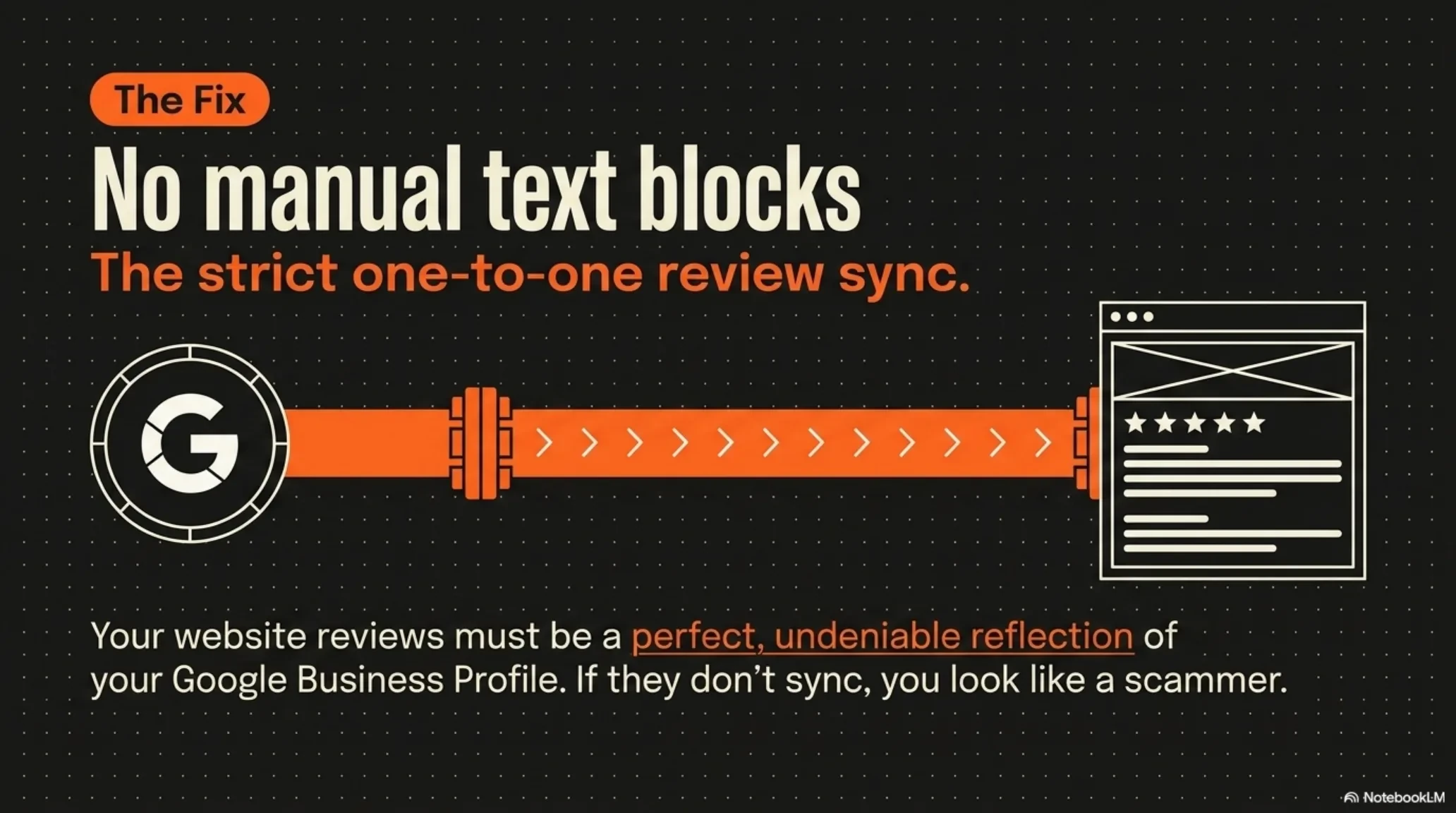
Here is the most reliable check, and it takes two minutes. Compare the reviews printed on the website against the reviews on the live Google listing. One of these fake sites bragged about a long wall of five-star stories. The live profile had nine reviews total, and only one name from the website actually appeared there. The rest were invented to fill a template.
If the names and stories on the website do not match the live profile, you are looking at a fraud. A website is easy to fake. A live profile with real, clickable reviewers is much harder to counterfeit at scale, which is exactly why the two never line up on a trap.
Trap or real shop: the tells side by side
Every check in this investigation comes down to one question: can the business prove it exists off-screen? Here is the pattern in one place:
| Signal | Lead-gen trap | Real local shop |
|---|---|---|
| Phone answer | Press-one menu, different company name, dodges service questions | Answers as the business, talks details of their own crew |
| Website reviews | Invented names that do not exist on the live profile | Match the live profile one to one |
| Photos | Generated crews, twin faces, impossible backgrounds | Real trucks, real crews, real job sites |
| License | Missing or unverifiable | Contractor license number displayed and checkable with the state |
| Social links | Dead pages or placeholders with zero local activity | Active accounts showing actual local work |
These traps are not a victimless shortcut. When one steals a lead, the customer gets sold to a random operator who may not be licensed or insured, your cost per real lead goes up, and every bad experience teaches homeowners to distrust the next honest contractor they find online. If you want to see what an intercepted call actually costs your shop, run your own missed-call numbers.
How to prove your shop is the real deal
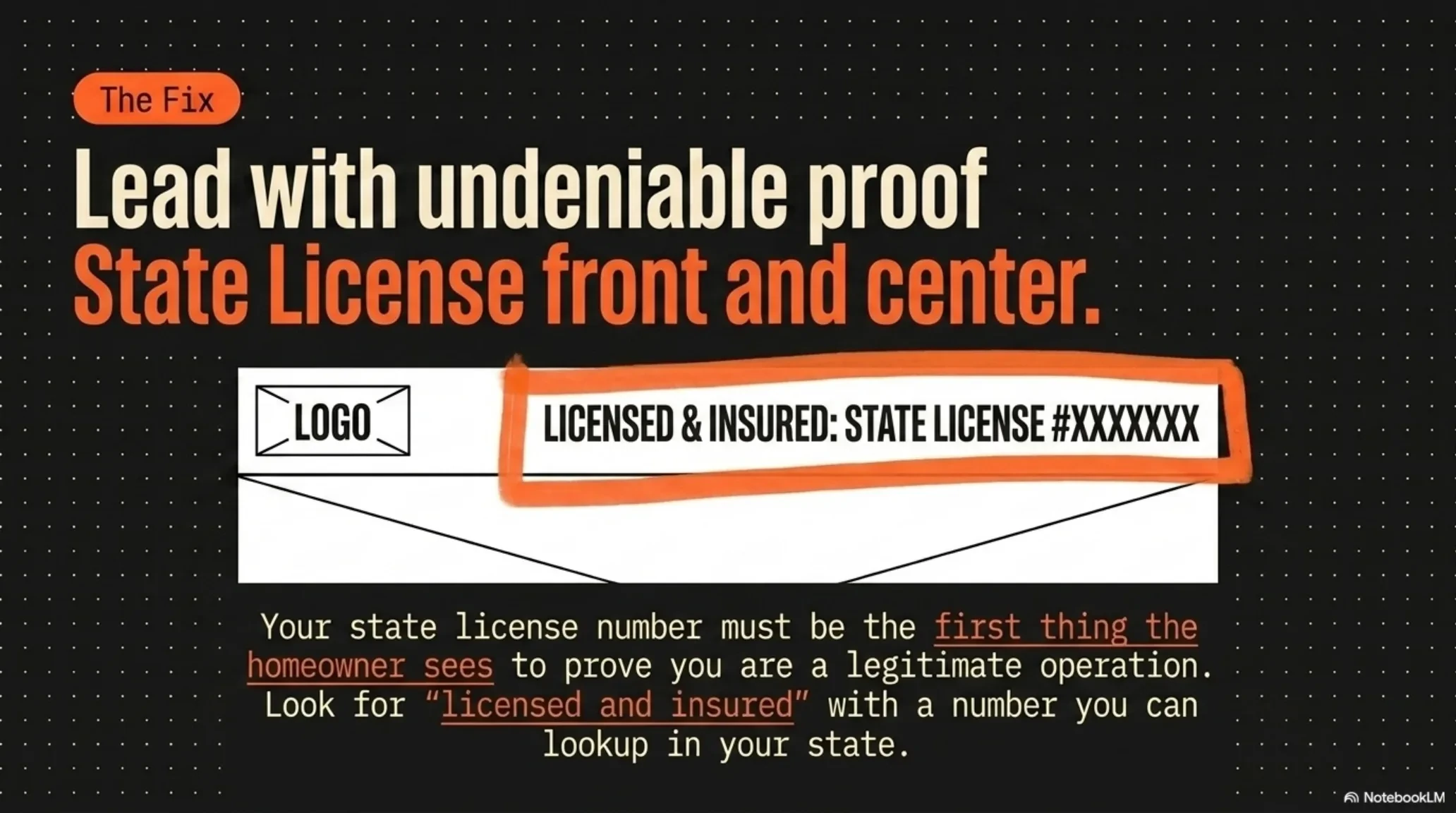
If the fakes get exposed by inconsistency, the honest shop wins with proof. Make it impossible to confuse your business with a trap:
- Put your license number front and center. Not buried in the footer. Here in Arizona that means your ROC number, verifiable with the Registrar of Contractors in seconds. Whatever your state calls it, lead with it.
- Keep website reviews in lockstep with your profile. Every review on your site should exist on your live listing. Fifty on the site and five on the profile makes you look like the scammers.
- Post real media, the one thing they cannot fake. A video of your branded truck pulling into a local driveway is the silver bullet. Real crews and real job sites build trust no generated photo can touch.
- Show your local roots. Veteran-owned, woman-owned, years in the community, the neighborhoods you serve. Lead-gen templates are generic on purpose; specifics are your moat.
- Total consistency. Same business name, address, and phone across your website and Google Business Profile, and your social accounts. Mismatches are the first thing a suspicious customer checks.
This is exactly why a website built to book jobs and a clean, consistent profile have to work as one system. The shops that show proof get the call. The traps get reported. I hold my own work to the same standard: everything on the J1 proof page is a real build you can watch happen on camera. And do report the traps: hit “Suggest an edit” on a fake listing and flag it, because every one that comes down makes local search safer for your customers and cheaper for you.
Frequently asked questions
Why are people making these fake listings?
They are lead-generation operations. The listing exists to capture a customer’s information and sell it to the highest bidder. The people running it do not do the work and usually have no connection to your community. They are digital middlemen skimming local search.
What happens if a customer hires a fake listing?
The person who shows up is often a random subcontractor, not the company the customer thought they called. These providers are frequently unlicensed or uninsured, which leaves the homeowner carrying the liability if a job goes wrong or someone gets hurt on the property.
Is it okay to use computer-generated photos if I am a real company?
Bad move. Generated images create the exact inconsistencies that make the scammers easy to catch, so they make you look like one. Show your real crew, your branded trucks, and the jobs you actually finished. Real photos are the only ones that build lasting trust.
How can I tell if a listing’s social media links are fake?
Click them. On one of the sites I investigated, the social link went to a page about board games, nothing to do with landscaping. Scammers use placeholder links or dead accounts with zero local engagement. A real shop’s accounts show actual local work.
Should I report these listings to Google?
Yes. Use the “Suggest an edit” option on the listing and flag it as non-existent or a scam, especially if you have proof like a call that routed to a different company. Reporting them cleans up the local market for every honest shop and every homeowner.